
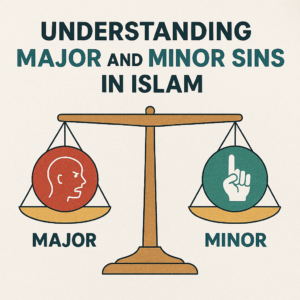
Definition of Major and Minor Sins
In Islam, sins are explicitly warned against in the Quran and Sunnah, with prescribed worldly punishments, divine curses, and severe afterlife consequences for serious offenses. Major sins include shirk, associating partners with Allah, murder, magic, sorcery, praying salat neglect, consuming riba, usury, interest, eating an orphan’s wealth, slandering chaste women, theft, adultery, zina, and disrespecting parents. Repentance requires specific, sincere taubah, involving guilt, stopping the act, seeking forgiveness, and making amends.
Minor sins are lesser transgressions, general faults, or minor religious errors without specific, severe warnings, such as gossiping, backbiting, ghibah, lying occasionally, wasting time, cursing, or using foul language. These can be forgiven through expiation, like performing ablution, wudu, walking to prayers, fasting, or giving charity.
Why Major Sins Must Be Avoided
Major sins must be avoided with persistence, because minor sins done continuously, without remorse, can become major. The goal is avoidance, and Muslims strive to avoid sins entirely, as distinction is not absolute, and intentions matter. Allah’s mercy is vast, covering good deeds, while major sins must be shunned.
Scholarly Insights
Scholarly views on major and minor sins reference seven Hadith, including works by Al-Hafidh, Ibn Abd As-Salam, Ibn As-Salah, and Ismail Al-Qadi, traced from Al-Hasan Al-Basri. Exalted deeds, documented in Al-Qurtubi, Al-Mufhim, provide consensus, with acts decreed or denounced in strongest terms. Checking authentic, sound texts is critical, as described by Al-Halimi in Al-Minhaj, highlighting shameful or abhorrent acts like killing ascendant or descendant, or acts in the Haram during sacred months.
Examples of Major and Minor Sins
Classical examples include harming a neighbour, mahram, or exceeding the threshold of stolen property (Tafsir, Kathir, 2/285-286). Narratives from Al-Bukhari, 2767, Muslim, 89, Abu, Hurayrah, and the Prophet, blessings, peace, Messenger emphasize avoiding doom, witchcraft, violating Islamic law, and harming the innocent, as noted by At-Tabarani, Al-Mujam, Al-Awsat, 5709, Said, Khudri. Scholars like Al-Albani in Sahih Jami, 4606, stress that major sins are not limited (Al-Fat-h, At-Tabari, Abbas) and can be seventy plus seven, warning against literal interpretations.
Consequences of Persisting in Sins
Persisting in minor sins threatens integrity, as the early generations warned. Conditions for repentance are outlined by Al-Qarafi, Al-Mawsuah, Al-Fiqhiyyah, 34/156, Al-Qayyim, Ighathat, Lahfan, 2/151, and Uthaymin. A prohibited habit, heedless behaviour, or glorified prohibitions can accumulate and destroy faith if one thinks lightly of insignificant acts.
Practical Guidance for Daily Life
Stories from Ahmad, 3808, Abdullah, Masud, using wilderness, sticks, pile, fire, pot, cooked, show how minor sins may grow into major ones (At-Targhib, 2470). Avoiding major sins purifies daily life, with forbidden small faults being remitted, opening the path to Paradise (An-Nisa’, 4:31). Awareness of great Al-Fawahish, illegal intercourse (An-Najm, 53:32) ensures accountability.
Muslims must steer clear of sins, remain faithful, guard every utterance, deed, and avoid the Wrath of Allah. Lessons from the righteous generation and Companions of the Prophet, Almighty, teach that avoiding evil deeds ensures noble entry into Paradise, shields from indecencies, and encourages forgiveness (angry) (Ash-Shura, 42:37).
Practical Tools
Structured guidance through “Our Courses”, knowledge of the “Monthly fee”, and the option of a “Free trial” help Muslims gain knowledge, avoid major and minor sins, and implement these lessons in daily life.