
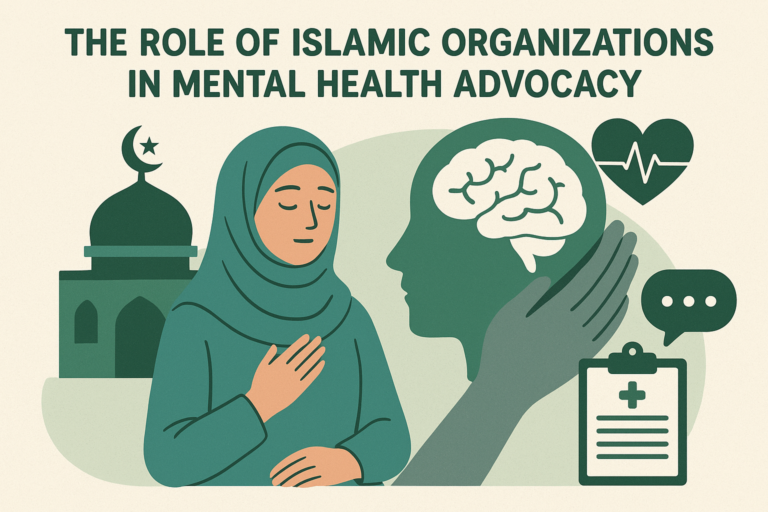
The Intersection of Faith and Mental Health
At the intersection of faith and mental health, Islamic organizations have emerged as crucial players across the globe, responding to growing attention around emotional well-being. From my own work with Muslim communities, I have seen how these organizations actively advocate and lead advocacy by integrating faith-based values with modern care. Their role is deeply holistic, centered on well-being, balance, harmony, and life, where the mind, body, and soul are interconnected.
Challenging Stigma and Misconceptions
A key contribution of these efforts is reducing stigma by challenging harmful perceptions, assumptions, and judgment that mental issues are purely spiritual failings or signs of weak belief. By promoting understanding that mental illnesses such as depression, stress, and anxiety are legitimate concerns requiring proper care, Islamic organizations affirm human dignity and compassion.
Islamic Teachings as a Foundation for Care
Drawing on principles from the Quran and Sunnah, these organizations emphasize values of mercy, care, and responsibility, framing mental health as a trust from Allah, SWT. This grounding helps communities see help-seeking as part of faith, not a contradiction to it.
Community-Based and Mosque-Centered Support
Through mosques, community hubs, and centers, imams and other religious leaders provide accessible guidance, counseling, and support for marital, social, and emotional challenges. Practices such as prayer, remembrance, and dhikr offer calm and spiritual grounding in times of distress.
Bridging Spirituality and Professional Help
These initiatives actively bridge gaps where secular approaches may miss essential spiritual dimensions, while still encouraging people to seek professional help. This balance allows individuals to receive care that respects both faith and clinical needs.
Training, Research, and Professional Development
Beyond community support, many organizations invest in training, resources, and clear standards for professionals and practitioners. Groups such as the Association of Mental Health Specialists, AIMS, and Maristan develops, supports, and advocates by translating research into practical education.
Building Faith-Sensitive Mental Health Services
Institutions like Stanford Muslim Mental Health and the Islamic Psychology Lab train counselors, therapists, and clinicians to deliver culturally competent, faith-sensitive care using evidence-based methods that respect beliefs and lived realities.
Global Collaboration and Shared Knowledge
These efforts align with broader health bodies such as the National Institutes of Health (NIH), APA, and PsycNet, while sharing knowledge through platforms like ResearchGate and YouTube video outreach, strengthening collaboration across sectors.
Worldwide Impact and Regional Examples
Global examples show meaningful impact in the United States through AMHP, in the United Kingdom via the Youth Helpline, in Canada through the Institute of Counseling, and in Pakistan through local initiatives, all expanding access without compromising faith.
Education, Awareness, and Sustainable Programs
Finally, educational workshops, online services, and structured courses help raise awareness, equip participants with coping strategies, and strengthen resilience. Programs like “Our Courses”, offered with a “Monthly fee” or “Free trail”, show how Islamic organizations sustain outreach while empowering individuals, communities, and wider populations to care for mental health with confidence and dignity.