
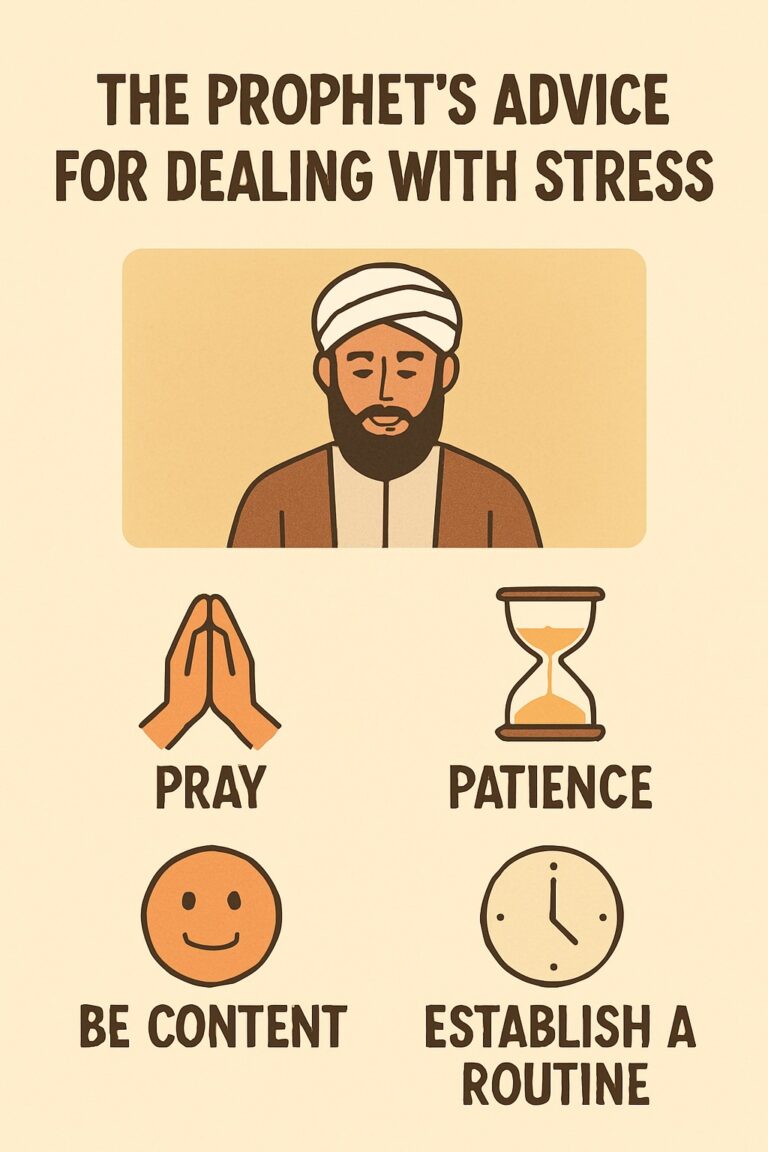
Seeking Refuge Through Du’a
The Prophet ﷺ advised using du’a and supplications during worry and grief. Making specific du’as, like “Allahumma innee a’uzubika min alhammi wal huzni,” allows one to seek refuge in O Allah and find relief.
Example Du’as for Guidance
He also taught, “Allahumma rahmataka arju falaa takilni ilaa nafsi tarfata ‘ayn, wa asslih li sha’ni kullahu,” which brings Mercy, hope, and helps manage affairs quickly, even in the blink of an eye.
Maintaining Remembrance of Allah
Encouraged regular prayer, reciting Quran, and maintaining remembrance, as “in the remembrance of Allah do hearts find rest,” to strengthen mental clarity and peace.
Trust and Reliance
Trust Allah’s plan and rely on tawakkul, remembering the key verse, “whoever relies upon Allah – then He is sufficient for him” (Quran 65:3), to build spiritual resilience.
Practicing Gratitude
Practice gratitude, be grateful for blessings, and shift focus from problems to solutions to ease emotional stress.
Seeking Forgiveness
Seek forgiveness regularly, continually ask pardon, and appoint your way to distress relief through spiritual cleansing.
Prioritizing Rest and Sleep
The Prophet ﷺ emphasized the importance of enough sleep as a critical part of maintaining mental and physical well-being.
Balanced Diet and Physical Health
Eat healthily, maintain a balanced diet, and practice moderation in all aspects of life. Engage in physical activity, relaxation, and leisure to reduce stress naturally.
Fostering Positive Relationships
Foster social connections and build a strong network. Islam encourages community and mutual support to share burdens and increase resilience.
Strengthening Connection to Allah
Perform regular prayers, recite Qur’an, and make Du’a consistently. This strengthens the connection to Allah and provides emotional comfort.
Managing Anxiety and Sorrow
Recite du’as such as “اللَّهُمَّ إِنِّي أَعُوذُ بِكَ مِنْ الْهَمِّ وَالْحُز” during extreme difficulty to turn to Rabb for relief from anxiety and sorrow.
Confiding in Trusted People
During stress, the Prophet ﷺ advised a two-step process: confide in trusted confidants and seek counsel, maintaining the right mindset and understanding of Creator and creation.
Examples from Battles and Hardship
In the Battle of Badr, 313 Muslims prayed in solitude, demonstrating reliance, trust, and seeking divine help even when outnumbered.
Morning and Evening Practices
Morning and Evening Invocations and du’as were practiced to dispel gloom and depression, offering profound relief for stress and anxiety.
Du’as for Financial and Daily Concerns
Du’as such as Allahumma ikfini bi-halalika ‘an haramik and aghnini bi-fadlika ‘amman provide relief from financial burdens, poverty, and daily stress, fostering resilience.
Submission and Absolute Trust
The Prophet ﷺ emphasized submission, expressing complete trust in Allah, as in “اللَّهُمَّ إِنِّي عَبْدُكَ، ابْنُ عَبْدِكَ…”, to remove anxiety, grief, and sadness, strengthening spiritual and mental well-being.
Practical Islamic Guidance
These teachings can be applied through Our Courses, with a Free trail and manageable Monthly fee, to learn Practical Ways to Manage Stress with Islamic Guidance.