
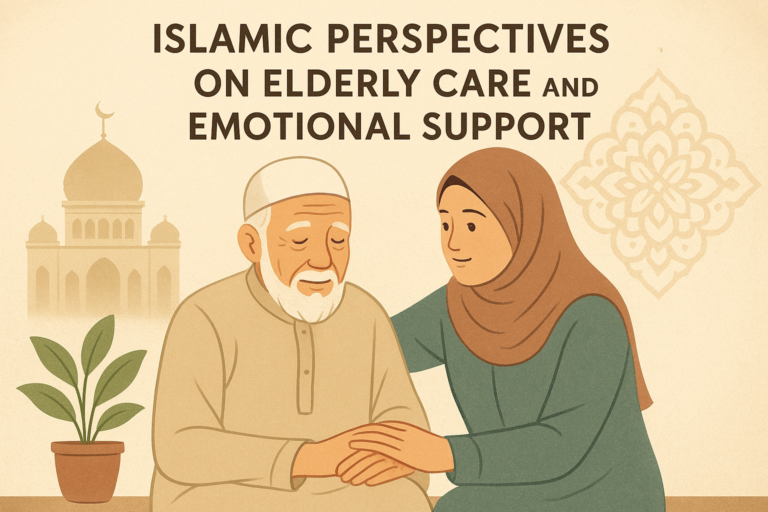
Faith as the Moral Foundation
Through lived experience with Muslim families across Arab, Arab-Muslim, and Middle East contexts, I have seen how Islamic religious perspectives shape care as a sacred duty rather than a personal favor. Grounded in texts such as the Quran and Hadith, guidance from Allah (SWT) and the Prophet (PBUH) frames caregiving as a divine mandates and lifelong obligation. This belief system, rooted in faith, beliefs, and ideologies, emphasizes mercy, compassion, kindness, respect, honour, dignity, humility, patience, forgiveness, and gratitude as everyday expressions of worship.
Filial Duty Across the Life Course
In Islam, responsibility toward parents, elders, and older adults grows stronger with age, ageing, and aging, not weaker. Children, offspring, and descendants are entrusted with responsibilities that extend through youth, adult life, and into later old age. Concepts such as filial piety, Ihsân, and Bir Al walidayn safeguard elders’ rights, privileges, status, and revered position within the family, extended families, and wider community, protecting them from neglect and abuse.
Emotional and Spiritual Support in Daily Care
From close observation, I have learned that emotional presence often matters as much as physical help. Companionship, communication, listening, friendliness, and genuine presence counter isolation, loneliness, and feelings of worthlessness. Prayer, prayers, reading Quranic verses, recitation, and remembrance bring calm, calming, and relaxation, offering solace, hope, acceptance, and emotional comfort for both elders and caregivers.
Responding to Illness, Decline, and Dementia
Islamic guidance addresses physical, emotional, mental, cognitive, neurocognitive, psychological, and spiritual needs, especially during illness, sickness, disease, mental-illness, dementia, Alzheimer’s, or senile decline marked by loss of memory, mind, or capacity, sometimes described as Kharaf. Teachings recognize weakness, regression, and decline as part of human life, offering exemptions and easing fear of punishment, destiny, or divine test.
Community, Healthcare, and Religious Leadership
Effective care-giving blends family devotion with wider support systems. Healthcare and medical systems, guided by professionals, providers, imams, sheikh, scholars, Sharia, and Fiqh, promote diagnosis, treatment, healing, remedies, and intervention through culturally competent, evidence-based, and qualitative research, methods, and interviews. Sermons, mosques, and counselling help translate faith into practical care.
Cultural Frameworks and Lived Practice
The Health Belief Model offers a useful framework for understanding how perception, perceptions, awareness, assessment, and needs shape behaviour and behaviours in family-centred, local, and cross-cultural societies. Across Qatar, the broader MENA region, and other communities, faith-based values, cohesion, and cohesive environments strengthen well-being, welfare, security, provision, protection, and inclusion.
Learning, Empowerment, and Practical Pathways
In my professional work, structured learning has proven vital for sustainable care. Initiatives like “Our Courses”, supported through a “Monthly fee” or “Free trail”, empower families and caregivers with guidance, instructions, rules, and practical tools. Such programs reduce burden, stressors, and risks, improve adherence, and foster long-term empowerment for elders, caregivers, and the wider society.