
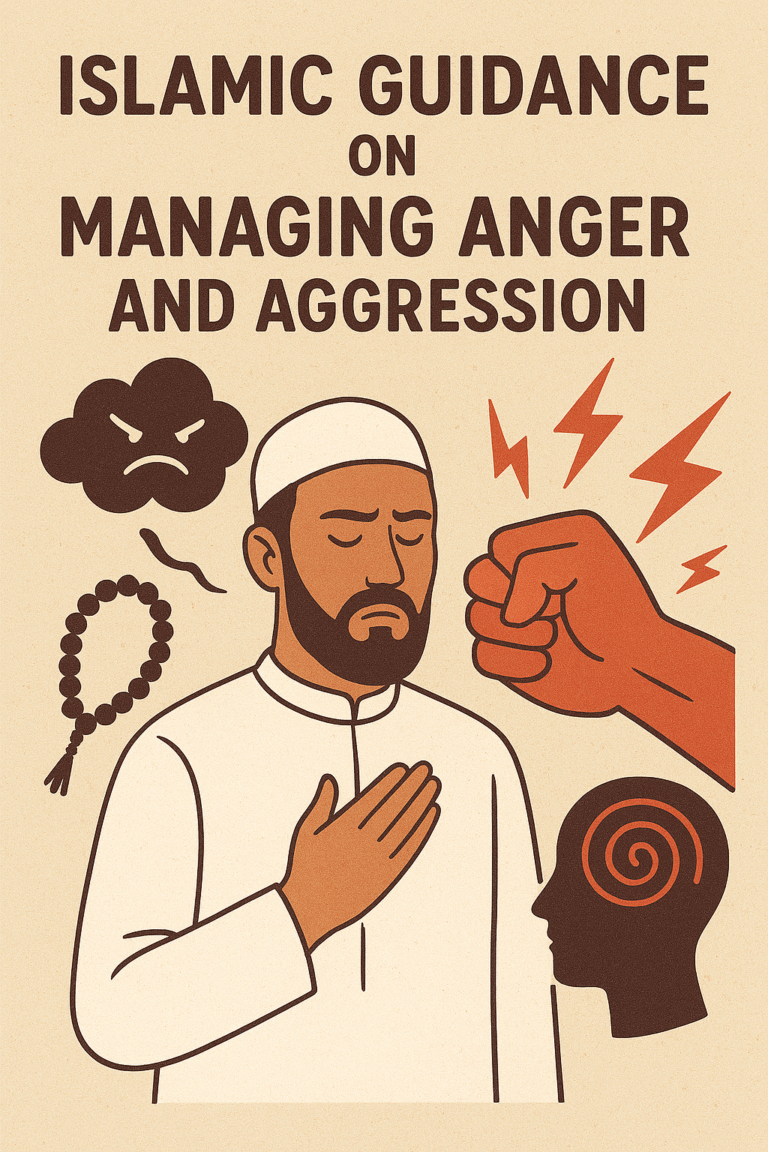
The Human Reality of Anger
Anger is normal, natural, and a healthy emotion that every human experiences as a response to problems and threats. Through years of working with individual cases and community sessions, I have observed that anger itself is not the problem; rather, the difficulty arises when anger becomes uncontrolled and begins to disrupt relationships, work performance, personal well-being, mental health, and spiritual growth.
When Anger Becomes Harmful
Unmanaged anger often leads to harmful outcomes such as broken relationships, regretful words, emotional distance, and internal unrest. Islam acknowledges these risks and therefore offers structured guidance to prevent anger from becoming destructive.
Islamic Guidance for Managing Anger and Aggression
Islam provides clear guidance for managing anger and aggression by encouraging believers to recognize emotional states, manage reactions wisely, and transform anger into positive actions. This guidance emphasizes self-control, seeking knowledge, counseling, and external help to maintain emotional balance and spiritual clarity.
Anger as a Moral and Spiritual Test
The Quran and Sunnah clarify that anger is not inherently sinful. Instead, it is a test of character and discipline. The Prophet Muhammad PBUH (peace upon him) taught that true strength does not lie in overpowering others, but in controlling oneself during moments of anger.
Strength Defined by Self-Control
This understanding of strength is supported by Islamic research initiatives such as Yaqeen Institute, narrations found in Abi Dawud, and therapeutic approaches like Shifa Therapy. Together, they reinforce the idea that emotional restraint is a sign of inner strength and spiritual maturity.
Common Triggers in Daily Life
In everyday life, anger is frequently triggered by stress, overwork, busy schedules, deadlines, excessive responsibilities, unmet expectations, professional disappointments, interpersonal conflicts, miscommunication, disagreements, injustice, oppression, and unfair treatment.
The Role of Mindfulness in Anger Control
Islam teaches believers to respond to these triggers with mindfulness. This includes recognizing early signs of anger, pausing before reacting, breathing deeply, counting to ten, and choosing thoughtful responses rather than impulsive reactions.
Immediate Islamic Practices for Calming Anger
Islamic teachings emphasize immediate suppression of anger through practical actions. These include seeking refuge in Allah by saying A’udhu billahi min ash-shaytan ir-rajim, changing physical posture (from standing to sitting, or sitting to lying down), remaining silent, and avoiding angry or regretful speech.
Physical and Spiritual Reset Through Wudu
Performing wudu (ablution) plays a key role in anger control, as water extinguishes the fire of anger that originates from Satan. Walking away from a heated situation also allows space for reflection and emotional cooling.
Forgiveness as a Long-Term Healing Strategy
Over time, Islam promotes forgiveness as a powerful tool for emotional healing. Repelling evil with good, as mentioned in Surah Fussilat (41:34), prevents anger from festering, earns rewards, and strengthens peace within the community.
Spiritual Practices That Build Emotional Stability
Regular prayer (Salah), Dhikr, and remembrance of Allah—such as SubhanAllah, Alhamdulillah, and Allahu Akbar—cultivate patience, gratitude, grounding, and inner calm. Supplications like Allahumma-ghfir li dhanbii, adhhib ghayza qalbi, wa a’ithnii min mudillatil-fitn ahyaytana further support emotional regulation.
Practical Lifestyle Tools That Support Anger Management
In real-life application, physical activity such as sports, walking, and light exercise helps release emotional tension. Journaling and constructive outlets provide safe ways to process feelings and reduce emotional overload.
The Role of Counseling and Professional Support
Qualified counselors, online services, and global platforms play an important role in supporting anger management, especially when emotional patterns are deeply rooted. Combining professional guidance with Islamic values leads to healthier long-term outcomes.
Supporting Families, Youth, and Professionals
Parents, educators, students, and professionals across Europe, North America, the UK, the Middle East, and Asia benefit from structured emotional guidance that aligns with both faith and modern life demands.
Learning Through Structured Islamic Programs
Through Our Courses, a flexible Monthly fee, and a Free trail, learners gain access to timeless Islamic teachings, actionable anger-management strategies, and faith-based tools designed to foster self-improvement and resilience.
Building Long-Term Emotional and Spiritual Stability
By combining spiritual practice, practical tools, professional guidance, and structured learning, anger can be transformed into an opportunity for personal growth, emotional balance, and long-term spiritual stability, inshAllah.