
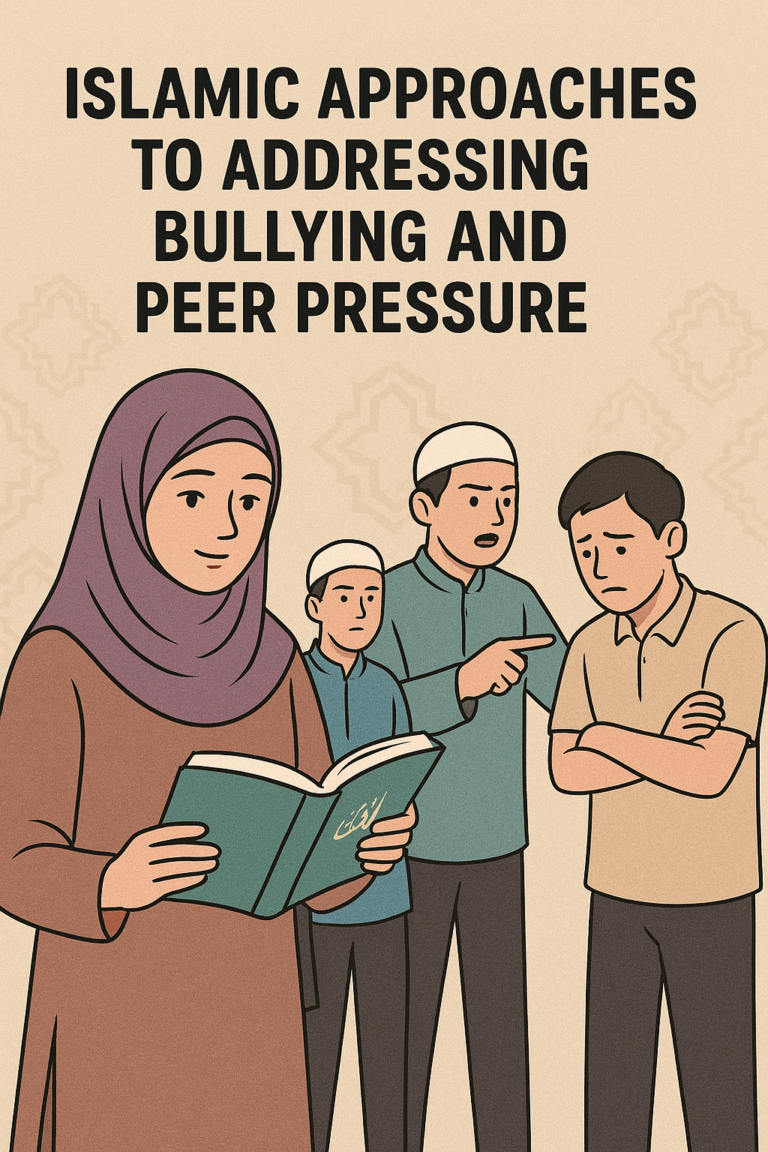
Understanding Peer Pressure Before Bullying
From my experience working with Muslims, youth, parents, and educators, I have noticed that peer pressure often appears quietly before open bullying, shaping behavior and behaviors in subtle ways. Islamic approaches and perspectives address this early stage through faith-based guidance rooted in Islam, faith, spiritual grounding, Taqwa, and Akhlaq, helping individuals recognize wrongdoing before it grows into misconduct, aggression, or abuse.
Prophetic Guidance and Moral Framework
The Prophetic example of the Prophet Muhammad (PBUH, ṣallallāhu, alayhi, wa, sallam) provides a clear model for responding to injustice with self-restraint, control, and calm over rage. Drawing from the Quran, Hadith, Sahih, Bukhari, and Quranic verses, Islam teaches that a truly strong person shows character, manners, wisdom, and integrity, not power, intimidation, or harshness.
Ethical View of Bullying in Islam
In Islamic ethics, bullying—whether by a bully, bullies, or subtle Positive Pressure—is a serious violation, sin, and misconduct. Acts such as backbite, gossiping, spreading rumors, or humiliating a victim damage dignity, respect, and self-worth, affecting both the oppressed and the oppressor. Islam calls for justice, mercy, compassion, empathy, and kindness, reminding communities to protect every child and adult from harm.
Emotional and Psychological Impact
Unchecked bullying can deeply affect psychological, emotional, and mental health, leading to anxiety, depression, humiliation, loss of trust, and weakened social skills. I have seen how these effects overwhelm families, creating stressors and fear, and why early intervention, support, and healing are essential to restore confidence, calmness, and hope.
Role of Families, Schools, and Educators
In daily settings such as school, classrooms, recess, bus stop, or cafeteria, effective prevention depends on parents, teachers, and educators fostering open communication, listening, and honest dialogue. Creating a safe space allows children to express emotions—whether angry, jealous, frustrated, or confused—without judgment, strengthening family and community bonds.
Community Support and Counseling
Islam encourages seeking guidance, help, and assistance through counseling, therapy, and advice from scholars, counselors, leaders, and even voices like Brad Smith from Tennessee. This shared responsibility builds resilience, empowerment, autonomy, and acceptance, while promoting forgiveness, reconciliation, and long-term healing.
Practical Tools and Positive Environments
Structured activities—such as groups, clubs, teams, YMCA, masjid activities, and meaningful hobby spaces—help create inclusive environments, sanctuary, refuge, and privacy. Clear boundaries, limits, role-play, brainstorming, plans, and safety measures protect children across social and cyber spaces like Facebook and other networks.
Sustaining Hope Through Faith and Action
Faith-driven efforts supported by supporters, MuslimMatters, Alhamdulillah, small donation, monthly gift, and consistent deeds bring blessings and khayr. Through “Our Courses”, offered with a “Monthly fee” or “Free trail”, families strengthen awareness, coping, and the ability to navigate modern challenges while holding firmly to Allah, the Lord, God, and the promise of strength, love, and hope. Ameen.