
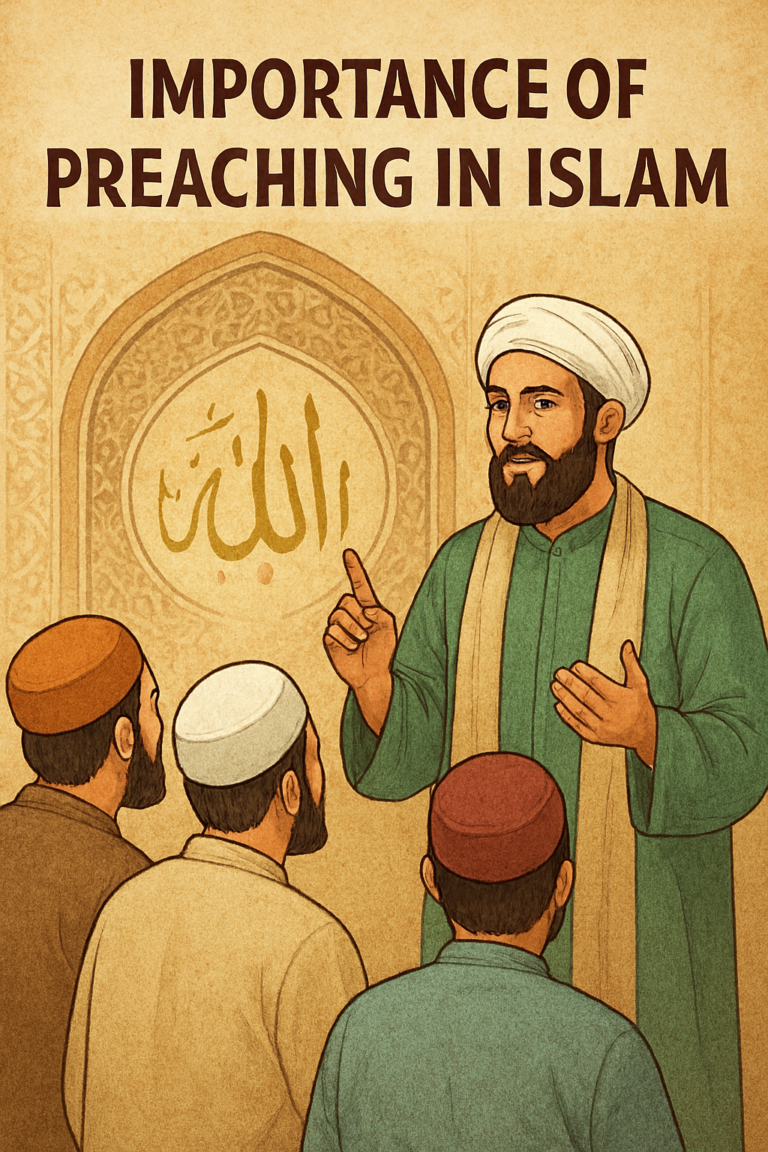
Understanding Da‘wah as a Core Islamic Responsibility
From my experience of teaching and research in Islamic studies, I have seen that Preaching, Da’wah, Dawah, and Da`wah are not limited acts of Calling, but a crucial matter of importance. They involve fulfilling a religious duty and moral responsibility from an ethical and sacred standpoint, making Da‘wah a lifelong commitment rather than a temporary effort.
Continuation of the Prophetic Mission
This continuing mission belongs to the Prophet, Prophets, Prophet Muhammad, Hazrat Muhammad, the Holy Prophet, and the Beloved Rasool (PBUH). Their Prophetic Mission, carried through the Messenger and preserved in the Sunnah, focused on strengthening faith, deepening conviction, and nurturing understanding that reinforces teaching, guiding, and guidance for humanity.
Collective Duty of the Muslim Ummah
Da‘wah is a collective responsibility of the Ummah, every Muslim, Muslims, Muslim brothers, and sisters, within their sphere of influence, from family to community. The duty is to call, invite, and engage people toward righteousness, uprightness, morality, virtues, and goodness, while actively enjoining good (Ma’ruf) and forbidding evil, to deter wrongdoing, sin, major sins, ignorance, and heedlessness.
Divine Guidance and Quranic Foundation
This responsibility is rooted in commands from Allah, Allah Pak, Allah Almighty, Allah SWT, the Almighty, guiding believers on the path and way of Allah. Through the Quran, Holy Quran, Quranic verses, Quranic ayahs, written in Arabic and described as Karim, believers are guided after the Final Nabi, the last Prophet, when the door of Nubuwa is closed forever.
Spiritual and Societal Benefits of Preaching
Da‘wah brings Spiritual and Societal Benefit, creating a harmonious, peaceful society and societal peace. It leads to success in this world and the hereafter, earning rewards, spiritual rewards, Paradise, Firdaus, and high ranks, while building a lasting book of deeds, a radiant afterlife, and inner illumination.
Wisdom, Method, and Character in Da‘wah
Effective Da‘wah requires wisdom (Hikmah), Kindness, beautiful methods, gentleness, patience, constancy, modesty, empathy, sincerity, and complete knowledge. It relies on clarity, simplicity, accessible messages, Active Listening, addressing questions and concerns, and maintaining effective communication while avoiding force and coercion and showing respect for beliefs.
Transforming Lives Through Teaching and Example
Da‘wah transforms lives positively, purifies the soul, protects from satanic attacks, and deepens Islamic wisdom. Through research, learning Islamic lessons, and teaching by example, the Daee grows in knowledge, strengthens devotion, and commits to a continuous process of personal and social reform.
Lessons from Hadith and the Companions
The value of Da‘wah is preserved in Hadith, Ahadees, narrated by scholars like Tirmidhi, and illustrated through examples such as Sayyiduna Noman bin Bashir and Musab ibn Umair (R.A) in Yathrib (Madina). These examples teach that neglecting Da‘wah leads to doom, while fulfilling it brings safety, mercy, and ongoing reward for future generations.
Personal Commitment to Learning and Teaching
This understanding shapes how I share knowledge through Our Courses, with a balanced Monthly fee and an accessible Free trail, ensuring that learning, teaching, and guiding others toward obedience, righteous action, and a successful life remains open to all.