
The Spiritual Meaning of Tahajjud
Tahajjud is a Sunnah Prayer that is performed during qiyām ul-layl, offering a quiet moment to connect deeply with Allah. It is not obligatory, yet it carries immense significance, as mentioned in the Qur’an and Hadith, including Surah Al-Isra 17:79 and Al-Muzzammil 73:1-6. From experience, this act of worship builds humility, patience, and faith, helping the believer feel close to the Lord and spiritually refreshed.
Best Time and Timing for Tahajjud
The correct Timing to Perform Tahajjud is after Isha night prayer and before Fajr. The most rewarding time is the last third of the night, when Allah descends to the lowest heaven, and sincere supplication, forgiveness, and blessings are answered, as narrated in Hadith from al-Bukhari 1145 and Muslim 758. I personally find this time peaceful, free from distractions, and ideal for reflection.
Preparation Before Starting Tahajjud
Proper Preparation makes a big difference. I usually Sleep briefly, then wake up, find a quiet, clean place, and perform fresh wudu (Wudu, ablution). This physical and mental readiness helps maintain focus and tranquility throughout the prayer, ensuring it is done with sincerity rather than routine.
Making the Intention (Niyyah)
Before beginning, I make a sincere intention (niyyah, Niyyah) and State it silently in my heart: I intend the Sunnah Prayer for Allah SWT. This step is essential, as intention defines the purpose of worship and turns simple actions into a meaningful spiritual practice.
Step-by-Step Method to Pray Tahajjud
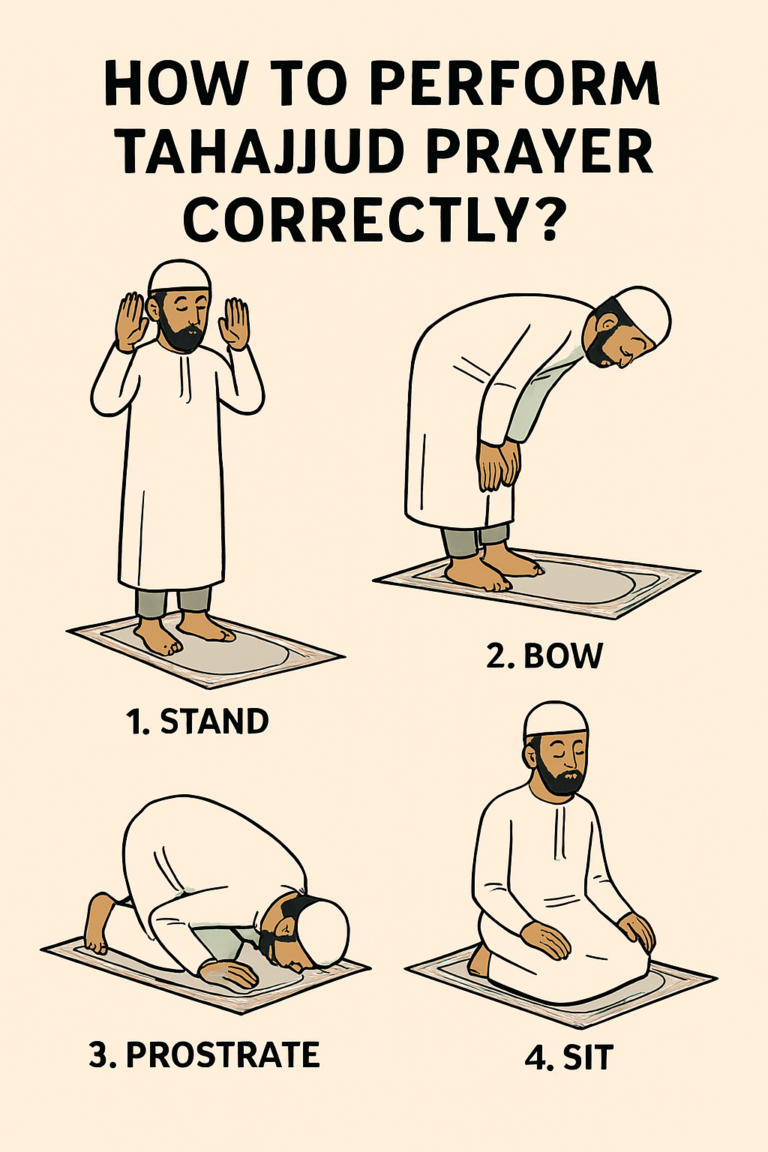
I Start the Prayer (Salah) with Takbiratul-Ihram, Stand facing the Qibla, feet shoulder-width apart, raise my hands, and say Allahu Akbar. I pray in pairs, two Rakat at a time, in sets of 2, 4, or 8. I recite the Quran, beginning with Surah Al-Fatihah, followed by longer verses, focusing on their meaning and reflection. Each Rukoo’, Sujood, and Rak’ah is done calmly, concluding each pair with Taslim.
Ending with Witr and Dua
I Finish Tahajjud with an odd number of Rak’ah as Witr, then Make heartfelt Dua. This is the moment I Talk and Speak to Allah in my own language, asking for forgiveness, guidance, and blessings, focusing on Sincerity and Quality over quantity.
Key Points for Sincerity and Consistency
The Key is to Start Small, even with two Rakat, and gradually increase. Sincere, focused praying is better than many distracted prayers. This habit builds discipline, nurtures Inner Peace, and strengthens the bond with the Creator. I often help learners establish this routine through Our Courses, offered with a simple Monthly fee and a Free trail, making it easier to build consistency and confidently maintain Tahajjud in daily life.