
Mindset, Intention, and the Path of Knowledge
To effectively study the Quran, begin with focus and a sincere intention (niyyah), learning for Allah’s sake, seeking His pleasure rather than worldly gain. Through reflection, Tadabbur, and ponder, imagine Allah speaking to you, stay emotionally invested, and understand the meaning behind the verses. This approach builds patience, consistency, and a lifelong journey that truly beats cramming. The Prophet Muhammad (sa) described the superiority of learned individuals over devout ones like the full moon over the stars, and promised that those who set off on the path of knowledge will find paradise made easy (At-Tirmidhi, Abu Dawood, authentic). This is good news for every student, as there is no more precious Book than the Quran.
Daily Routine, Study Methods, and Consistency
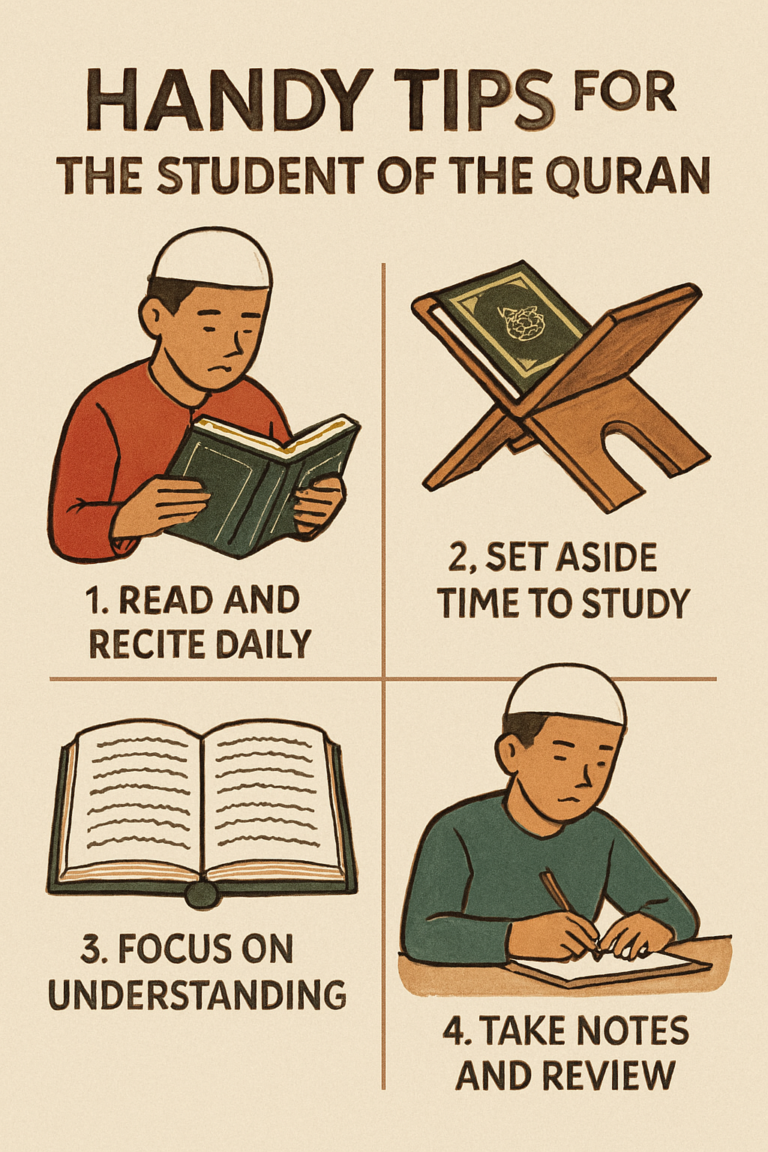
Build a daily routine and establish consistent habits, especially in early mornings. Dedicate fixed, distraction-free time, even 5–30 mins, increasing gradually. Start small, begin with short Surahs, chapters, or one Ayah a day, then move forward with mastering before moving ahead. Read, recite, listen, and repeat native recitations to improve pronunciation, rhythm, memorization, and revision. Integrate recitation of memorized parts into Salah (prayer). Maintain a notebook, a Quranic journal, jot reflections, questions, and notes, then revisit thoughts later. Use vocabulary cards, word-to-word translation, apps, websites, Smartphone applications, audio, and traditional resources to aid learning.
Understanding, Tafsir, and Deeper Comprehension
For true comprehension, learn basic Arabic, including grammar and vocabulary. Choose a reliable translation to comprehend context, compare translations, and find what resonates. Enhance understanding with Tafsir—books, online resources, and historical insights—to see how meanings are enriching. Reflect and contemplate, as the Quran encourages believers to ponder, relate teachings to life, and allow contemplation to foster a profound connection with the text.
Guidance, Community, and Teaching Others
Seek guidance from a mentor, qualified instructor, or scholars who can clarify doubts, correct recitation, and provide insights. Join study circles, group sessions, and community discussions at local Islamic centers or online platforms. Discuss what you learn with family and friends—this solidifies knowledge, reinforces grasp, and helps spread benefit. Teaching others deepens understanding and contributes to an informed community.
Tools, Technology, and Learning Environment
Create a calm, quiet, distraction-free environment at home, designate a place, and keep necessary materials within reach. Utilize technology wisely with Quranic apps, Quranic websites, audio recitations, Hadith resources, and study guides that are easily accessible on devices. Platforms like qutor.com offer tutors, guides, and students to assist your journey, including online courses. Explore Our Courses, check the Monthly fee, and begin with a Free trail.
Living the Quran and Staying Steadfast
The Quran is not merely theoretical; it provides practical guidance. Implement teachings through actions, embody principles, practice patience, charity, and forbearance, and let the Quran transform your relationship with Allah. Stay humble and open, recognize the Quran’s vast depth, and allow each reading to reveal new meanings. Stay consistent and patient—small steps count, and beloved deeds are those done regularly (Bukhari, Muslim). Make dua, never underestimate the power of supplication, ask Allah to bless efforts, grant steadfastness, begin each session with intention, and conclude with gratitude.