
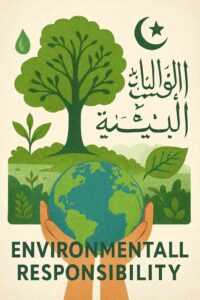
Environmental Responsibility in Islam
Humans as God’s Stewards
Islam teaches that humans are God’s vicegerents on Earth, entrusted to manage and protect it for future generations. This stewardship requires maintaining balance, or Mīzān, in all ecological aspects, adopting a moderate lifestyle, and avoiding waste (Isrāf), which is strictly forbidden. From water use during ablution to food consumption, natural protection of nature, forests, rivers, air, and biodiversity is emphasized. Islam encourages compassion toward all beings, ethics in dealing with creatures, rejection of harm, and avoiding sport or pleasure that causes unnecessary damage. Responsible consumption, minimizing excessive indulgence and luxury, and adopting sustainable practices are principles for sustainability, while conserving resources, minimizing pollution, restoration, and reviving barren land through planting trees are noble, rewarding acts. Protected areas, like Hima, safeguard wildlife, and accountability reminds Muslims that all actions are believed and held by God.
Ethical Stewardship and Sustainable Living
Following ethical and economic systems that discourage corporate overproduction and mass production aligns with Islamic beliefs, traditions, and values, providing an effective, comprehensive solution to environmental challenges. Humans inherit a rich tradition that highlights importance of conservation. Islamic law recognizes basic elements like land, water, fire, and light, extending care to living things. Holy Qur’an and Sunnah are guiding light, promoting development in countries while Allah, Subhanahu, Ta’ala, commands to avoid mischief, wasting, and acts that cause degradation of the environment. Humankind holds privilege and guardianship, implying the right to use a person’s property responsibly, ensuring promises are not damaged or destroyed.
Practical Steps for Individuals and Communities
Quranic references, Hadiths, and guidance from Prophet Muhammad, Sallallahu, Alaihi, Wasallam teach trusteeship, making man a custodian who ensures harmony, duty, respect, nurture, and care, avoiding corruption, industrial damage, reckless exploitation, or mismanagement. Practical steps include conserving water, food, soil, energy, wildlife, and habitats, adopting moderation, Wasatiyyah, avoiding hoarding, and engaging in Recycling, Reusing, and sustainable practices. Everyday actions like performing Wudu with minimal water, efficient agriculture, and mindful consumption are moral, divine mandates, fulfilling the Concept of Khalifah. Communities can promote Green Initiatives, eco-friendly living, and educational workshops, while individuals adopt practical steps such as minimizing single-use items, using reusable alternatives, and conserving energy and water—reflecting ethical, humane, and sustainable stewardship of the planet. Our Courses, Monthly fee, and Free trail can support learning about these responsibilities and practices in everyday life.