
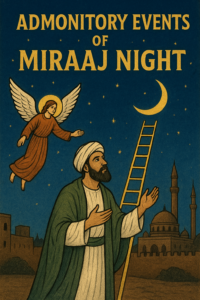
The Sacred Night of Israʾ and Miʿraj
During the Miraj, Miraaj, Israʾ, and Miʿraj Night, the Prophet Muhammad ﷺ (PBUH) undertook a miraculous journey described in Arabic as الإسراء and المعراج, known as al-Isrā’ wal-Miʿrāj. These Islamic narrations explain how he ascended through the sky, witnessed a profound vision of the afterlife, and returned, as referenced in verses of Surah an-Najm, Surah al-Isrā’, and the Quran chapter that preserves this sacred story.
Witnessing Hell and Its Warnings
During this journey, the Prophet personally witnessed admonitory scenes of hell, Jahannam, and Jahanm, where severe punishments were shown for specific sins as clear warnings for humanity. These scenes were not symbolic alone; they were meant to awaken conscience and accountability.
Punishment for Neglecting Zakat
Among the most striking sights were people eating foul bitter grass, living like animals in rags, because they failed in paying zakat, Zakat, or Zakah, despite it being an obligatory charity and one of the five pillars of Islam.
Orphans’ Wealth and Severe Consequences
Those who consumed orphans’ wealth unjustly were shown with camel-like lips, swollen like camels, forced to swallow huge fiery stones that were thrust into their mouths, illustrating the gravity of betraying trust.
Backbiting, Fault-Finding, and Defamation
The Prophet, as narrated by Anas رضي الله عنه through Jibril (Gabriel) and recorded by Abu Dawud, saw men and women guilty of backbiting, gossip, and fault-finding. They were hanging by their chests or scratching faces with copper nails, a vivid image of how words can destroy honor.
Scholarly Definition of Backbiting
Scholars such as Mufti Amjad Ali A’zami عَلَیْہِ رَحْمَۃُ اللہِ القَوِی defined backbiting as mentioning someone’s hidden fault in their absence to disparage, as recorded in Bahar-e-Shari’at, reinforcing the moral lesson behind these scenes.
The Curse of Riba and Financial Corruption
Another disturbing sight showed the curse of Riba, where usurers had big bellies like rooms, filled inside with snakes, visible from the outside, showing the spiritual rot caused by unlawful wealth.
Laziness in Salah and Neglect of Worship
People who were lazy in Salah were seen with heads crushed by stones, representing how neglecting prayer weighs heavily on the soul.
Teaching Without Practice
Those who gave Khutbah advice to the Ummah but failed to act upon the Holy Quran themselves had their lips constantly cut with fire scissors, highlighting hypocrisy in religious leadership.
Disrespecting Parents
The Parents, described as matchless blessings, were wronged by those who neglected rights and abused them. Such people were shown hanging from fire branches, emphasizing the severity of this sin.
Infanticide and Concealing Sin
Scenes also showed unlawful children, sinful acts, and infanticide, where women who killed children were hanged by breasts and feet, a terrifying reminder that no sin is hidden from Allah.
Swindling Orphans and Devouring Wealth
Those who swindled orphans were punished with stones entering their mouths and exiting from their bottoms, a graphic lesson on injustice.
Refusing to Pay Zakat
People who were not paying Zakat were shown eating poisonous plants and hot stones, grazing like quadrupeds, reinforcing the obligation of financial purity.
Spiritual Lessons and Lasting Impact
These visions confirmed the realities of heaven (Jannah) and hell, showing the tangible results of good and bad deeds, strengthening guidance, righteous conduct, divine mercy, and awareness of Barzakh, the intermediate realm. Through reflection, teaching, and sharing knowledge—whether in study circles or Our Courses with a reasonable Monthly fee and Free trail—these lessons continue to awaken hearts and reshape lives.